
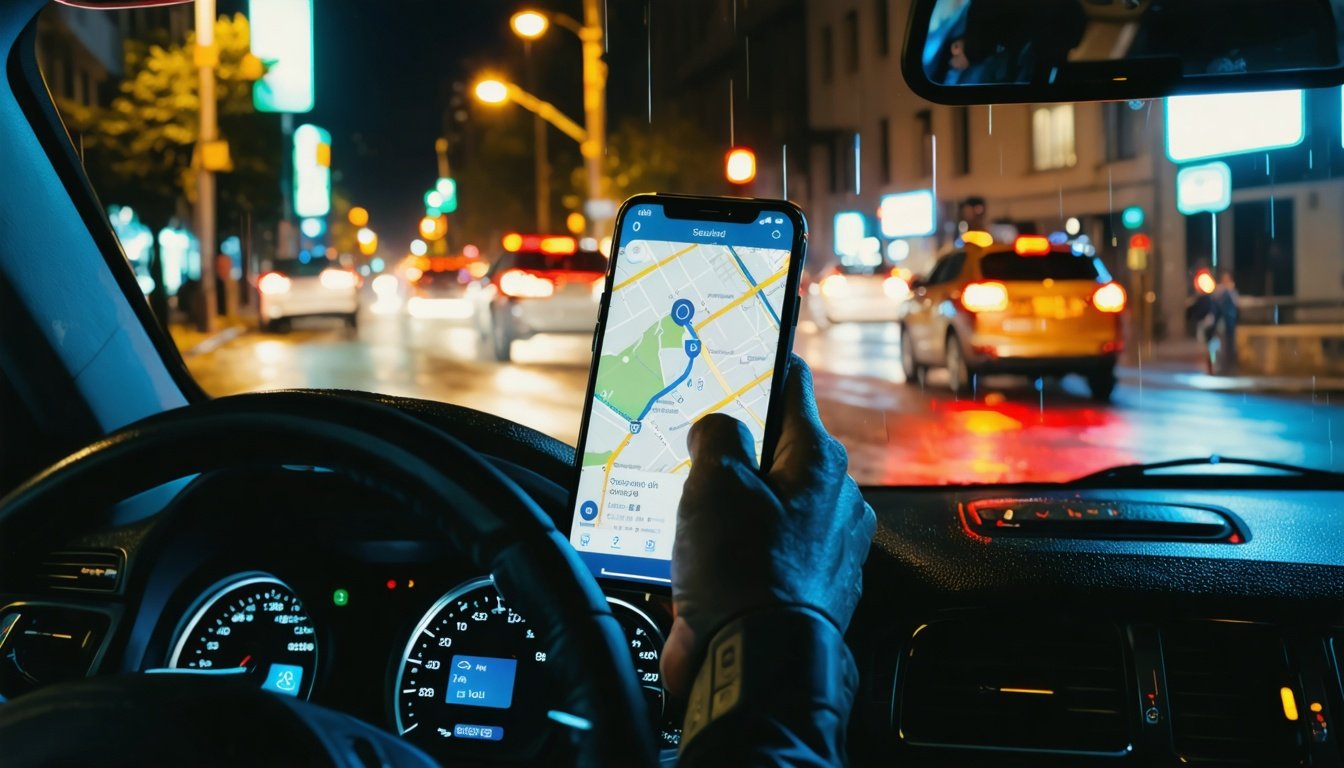
If the rideshare driver was offline during an accident, their personal auto insurance policy is the primary source of coverage, not Uber or Lyft’s commercial policy. In this situation, the driver is treated as a private individual operating their own vehicle, which means the rideshare company bears no liability for the crash.
This scenario catches many accident victims completely off guard. Most people assume that if a driver works for Uber or Lyft, the company’s insurance automatically applies whenever something goes wrong. The reality is far more layered, because rideshare companies structure their coverage around specific app activity periods, and an offline driver falls entirely outside that structure. Understanding exactly where the legal and financial responsibility lies can make the difference between a recovered claim and an uncompensated injury.
How Rideshare Insurance Coverage Actually Works
Rideshare companies like Uber and Lyft divide driver activity into distinct coverage periods, and each period carries different insurance protections. The coverage that applies to any given accident depends entirely on what the driver was doing at the moment of the crash.
When a driver is fully offline, meaning the app is closed or turned off, neither Uber nor Lyft provides any insurance for accidents that occur. The driver’s personal auto insurance is the only available coverage, and even that can be complicated. Many standard personal auto policies include exclusions for commercial or business use, which means a driver’s insurer could potentially deny a claim if the vehicle was being used for rideshare purposes at any point.
The coverage structure changes once the app is active. Georgia law, along with the rules of most rideshare platforms, recognizes three distinct phases of driver activity, each with different insurance implications. Knowing which phase was active at the time of a crash is often the first and most important step in any accident claim.
The Three Rideshare Coverage Periods Explained
Rideshare accidents fall into one of three coverage periods, and each one determines who pays and how much coverage is available. These periods are defined by the driver’s app status at the time of the collision.
Period 0: App Is Completely Off
Period 0 is when the rideshare driver has the app turned off entirely. The driver is operating purely as a private citizen, and no rideshare coverage applies under any circumstances. Only the driver’s personal auto insurance policy is in play, and the coverage limits are whatever that individual policy specifies.
If the driver’s personal policy has low limits or contains a commercial use exclusion, an injured victim may face serious challenges recovering full compensation. In Georgia, drivers are required to carry minimum liability coverage under O.C.G.A. § 33-34-4, but those minimums may not be enough to cover serious injuries from a significant crash.
Period 1: App Is On, No Ride Accepted
Period 1 begins when the driver turns the app on and is waiting for a ride request but has not yet accepted one. This is a transitional zone where limited coverage from Uber or Lyft does apply, but at lower limits than during an active trip. Under Georgia’s Transportation Network Company law (O.C.G.A. § 33-1-24), rideshare companies must provide at least $50,000 per person and $100,000 per accident in liability coverage during this period, along with $25,000 for property damage.
This period often creates confusion because victims may not realize the app was active but idle. Checking the driver’s phone records and app logs becomes important evidence in these situations, as it directly determines which coverage tier applies to the claim.
Period 2 and Period 3: Active Ride in Progress
Period 2 begins the moment a driver accepts a ride request, and Period 3 covers the time when a passenger is actually in the vehicle. Both Uber and Lyft provide their full $1 million liability coverage during these periods, which offers significantly more protection for injured victims. Georgia law requires this level of coverage under O.C.G.A. § 33-1-24 as well.
A driver who was online and actively transporting or heading to pick up a passenger falls squarely within this coverage, giving injured parties the best chance at full compensation. The key difference from an offline scenario is stark: Period 0 leaves victims relying entirely on a private driver’s personal policy, while Period 2 or 3 brings corporate-level insurance into the equation.
What Happens When the Driver Is Offline and at Fault
When an offline rideshare driver causes an accident, the injured party must pursue a claim against the driver’s personal auto insurance directly. This process looks very similar to any standard car accident claim in Georgia, but a few factors make it more complicated.
The first complication is coverage adequacy. A driver who carries only Georgia’s minimum liability limits of $25,000 per person may not provide enough coverage if the injuries are serious. Medical bills from a significant accident can far exceed that amount, leaving victims in a position where they need to explore other options.
The second complication is the potential for the driver’s insurer to dispute the claim. Some personal auto policies contain rideshare exclusions, and while the driver may have been technically offline at the time of the crash, the insurer might investigate whether the driver was using the vehicle for commercial purposes. If a dispute arises, having legal representation becomes particularly valuable.
Your Own Insurance as a Backup Option
If the offline driver’s personal insurance falls short or denies the claim entirely, your own auto insurance policy may offer additional protection. Specifically, uninsured and underinsured motorist coverage, required to be offered in Georgia under O.C.G.A. § 33-7-11, can bridge the gap when the at-fault driver’s coverage is insufficient.
Uninsured motorist coverage applies if the at-fault driver has no insurance at all. Underinsured motorist coverage applies when their policy limits are too low to cover the full value of your damages. Both forms of coverage are part of your own policy and do not require you to prove fault again against a separate party.
If you were a passenger in the rideshare vehicle during a Period 0 accident, your own personal insurance may also cover you. Additionally, any health insurance you carry can help address medical costs while the liability question is being resolved through the claims process.
How to Determine Whether the Driver Was Actually Offline
Confirming a driver’s app status at the time of an accident is not always straightforward. Drivers may make inaccurate statements about their status, and insurers have a financial interest in characterizing the situation in whichever way limits their exposure. Gathering objective evidence is essential.
Several types of evidence can establish what the driver’s app status was at the time of the crash. This includes subpoenaing records directly from Uber or Lyft, which maintain detailed logs of driver activity including when the app was opened, closed, and when rides were accepted or completed. Phone records can also show app activity timestamps that corroborate or contradict the driver’s account.
An attorney experienced in rideshare accident cases can send a legal hold notice to the rideshare company early in the process, preventing those records from being deleted. This step is time-sensitive and often determines whether the true coverage period can be established. Getting this evidence right is what separates a fully compensated claim from an underpaid one.
Filing a Claim After an Offline Rideshare Accident
Pursuing compensation after this type of accident requires prompt action and a clear understanding of who to contact first.
Get Medical Attention Immediately
Seek medical care right away, even if injuries do not seem severe at first. Some injuries like internal trauma or soft tissue damage do not show obvious symptoms immediately after a crash. A prompt medical evaluation creates an official record linking your injuries to the accident, which is necessary for any insurance claim.
Keep every document related to your care, including emergency room visits, follow-up appointments, prescription costs, and any specialist referrals. These records form the financial foundation of your compensation claim and must be preserved carefully from the start.
Document the Scene and Gather Evidence
Photograph the vehicles, road conditions, traffic signs, and any visible injuries while still at the scene if it is safe to do so. Collect contact information from witnesses and get a copy of the police report, which in Georgia can typically be obtained through the responding law enforcement agency or online through the Georgia Open Records portal.
Note the exact time of the accident and ask the driver directly whether the rideshare app was active. Their answer, even if later disputed, becomes part of the evidentiary record. Do not rely solely on their word, though, as app data from the company will be the authoritative source.
Contact the Driver’s Insurance Directly
Since the driver was offline, Uber or Lyft’s insurance does not apply, so your claim goes directly to the driver’s personal auto insurer. Get the driver’s insurance information at the scene and report the accident to that insurer promptly. Be factual and careful in your statements; do not speculate about fault or describe your injuries in more or less detail than you actually know.
Insurance adjusters work to protect their company’s financial interests, not yours. Providing a recorded statement without legal advice can result in your words being used to minimize your claim later.
Consult an Atlanta Rideshare Accident Attorney
Speak with a qualified attorney before accepting any settlement offer. An attorney can review the driver’s insurance coverage, investigate whether the app status is accurately reported, and identify all available sources of compensation including your own underinsured motorist coverage. Atlanta Truck Accident Law Group handles rideshare accident cases and can help you build a strong claim from the start.
Call Atlanta Truck Accident Law Group at (404) 458-7215 for a free consultation. Acting early preserves critical evidence and protects your rights before deadlines run.
Georgia’s Statute of Limitations for Rideshare Accident Claims
Georgia law gives injured victims two years from the date of the accident to file a personal injury lawsuit under O.C.G.A. § 9-3-33. Missing this deadline almost always results in losing the right to seek compensation through the courts, regardless of how strong the case might be.
Two years may seem like a long time, but building a successful claim takes time. Medical treatment must progress far enough to understand the full extent of injuries, evidence must be gathered and preserved, and negotiations with insurers often take months. Starting the process early gives your attorney the time needed to do the work properly without the pressure of an approaching deadline.
If the accident resulted in a fatality, Georgia’s wrongful death statute under O.C.G.A. § 51-4-2 also carries a two-year limitation. Family members pursuing such a claim should contact an attorney as soon as possible after the loss.
When the Rideshare Company Might Still Bear Some Responsibility
Even when a driver was technically offline at the time of the crash, there are narrow situations where the rideshare company’s liability may still be worth examining. These situations are uncommon but worth raising with an attorney.
One potential avenue involves negligent hiring or retention. If Uber or Lyft hired a driver with a known history of dangerous driving, DUI convictions, or prior accidents that should have disqualified them from driving, and that driver later causes harm, the company’s screening process may become part of the legal argument. Both Uber and Lyft are required to conduct background checks on drivers under O.C.G.A. § 33-1-24.
A second consideration arises if the driver was using the vehicle for rideshare purposes but claims to have been offline to avoid corporate liability. In that scenario, evidence of recent trip completions or passenger communications could reveal the true nature of the driver’s activity at the time of the crash. An attorney can investigate these angles systematically.
Frequently Asked Questions
Can I sue the rideshare company if their driver was offline?
Generally, you cannot sue Uber or Lyft directly when their driver was offline at the time of the accident. Because the driver is classified as an independent contractor and the app was inactive, the company’s liability coverage does not apply and the legal claim is against the driver personally. Uber and Lyft have consistently argued, with success in most courts, that they bear no responsibility for driver conduct outside of active app sessions.
There are limited exceptions, such as cases involving negligent hiring where the company’s background check failures directly contributed to the accident. These claims are harder to win and require specific evidence about what the company knew or should have known about the driver’s history before approving them to drive. Consulting with a rideshare accident attorney is the best way to determine whether such an argument applies to your specific situation.
What if the driver lied about being offline?
If a driver falsely claims they were offline to shift liability away from Uber or Lyft’s commercial coverage, this can actually be uncovered through app records and phone data. Rideshare companies maintain detailed timestamped logs of driver activity, and those records can be requested through formal legal discovery or a subpoena if litigation is filed. A discrepancy between the driver’s account and the app data is significant evidence in your favor.
An attorney can file a legal hold request with the rideshare company early in the process to make sure those records are preserved before they are deleted in the normal course of business. If the records show the driver was actually in Period 1, 2, or 3, the entire coverage picture changes and substantially more insurance becomes available for your claim. Acting quickly after the accident gives you the best chance of securing this evidence.
Does my own insurance cover me if the at-fault driver was offline?
Yes, your own auto insurance can potentially cover you through underinsured or uninsured motorist coverage if the offline driver’s personal policy is insufficient or nonexistent. Under O.C.G.A. § 33-7-11, Georgia insurers are required to offer this coverage, though policyholders can reject it in writing. If you carry this protection, it can pay the difference between what the at-fault driver’s insurance covers and the actual value of your damages.
If you were a pedestrian or bicyclist at the time of the accident, your own auto insurance policy may still apply depending on how it is written. Health insurance can also cover medical expenses during the claims process, which you may be able to recover later through your injury settlement. Review your own policy carefully with your attorney to identify every available coverage source.
How long does it take to resolve an offline rideshare accident claim?
The timeline varies based on the severity of injuries, the complexity of coverage disputes, and whether the case settles or goes to litigation. Straightforward claims with clear liability and full insurance coverage can sometimes resolve within a few months. Cases involving disputed app status, denied claims, or serious injuries often take a year or more to reach a final resolution.
Georgia’s two-year statute of limitations under O.C.G.A. § 9-3-33 sets the outer boundary for filing a lawsuit, but settling before trial is almost always faster and less costly for all parties. The most effective way to move a claim forward efficiently is to have an attorney manage communications with the insurer, gather evidence early, and push back promptly when adjusters delay or undervalue the claim.
Conclusion
When a rideshare driver is offline during an accident, the coverage situation is more limited but far from hopeless. The driver’s personal auto insurance takes center stage, and your own underinsured motorist coverage may provide a critical safety net if that policy falls short. Verifying the driver’s true app status through company records is often the most important step in determining what coverage actually applies.
If you were injured in an accident involving an offline rideshare driver, Atlanta Truck Accident Law Group is ready to help you understand your options and pursue every dollar of compensation available to you. Call (404) 458-7215 today for a free consultation and let an experienced attorney review your case before time-sensitive evidence disappears.